Endorphin
Endorphin is an AI-driven running app that transforms your emotional state into personalized routes to encourage and guide you toward joy.
↓
Role
Research
Research Implementation
User Testing
Mid-Fid Design
Timeline
Research: 7-10 weeks
Design & User Testing: 3-4 weeks
Overall: 14 weeks
Process
Figma, Adobe Photoshop
Tools
User Research, User Interviews, User Testing
*Collaborative Project with Leo Song, Jaden Kim, & Monica Fang
AI’s role should be as a supportive tool that encourages real-world experiences rather than creating emotional dependence.
Research
Opportunity
Secondary Research
Primary Research
User Interviews
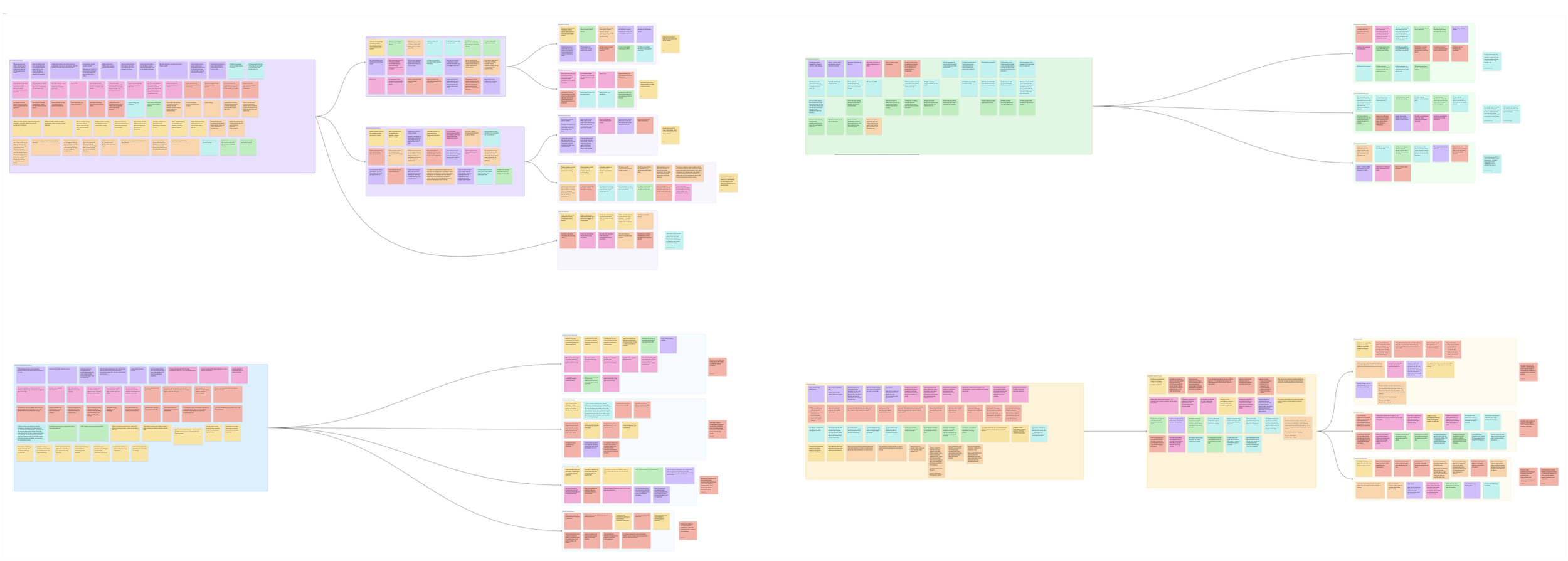
Affinity Mapping
Insight *
How might we use AI to create personalized dynamic running experiences that match mood, environment, and curiosity for exploration?
Joy is a present emotion that enhances well-being through dopamine release, often found through meaning, alignment, and shared experiences.
Runners crave companionship and emotional support while running, not just data-driven motivation. Current fitness tools may provide information, they do not shared understanding and emotional awareness that makes human support truly motivating.
Objectives
Understand the source of joy and motivation in runners.
Discover how comfortable users are with AI interaction.
Investigate devices, app, preferences, and tool usage during runs.
A total of 7 interviews were conducted — 6 remote and 1 in-person — with one team member facilitating the interview and another serving as the notetaker.
Running boosts endorphins, improves mental health, and supports motivation through tracking, sharing progress, and positive self-talk.
→ By interviewing runners with different levels of experience, we identified distinct needs across user groups.
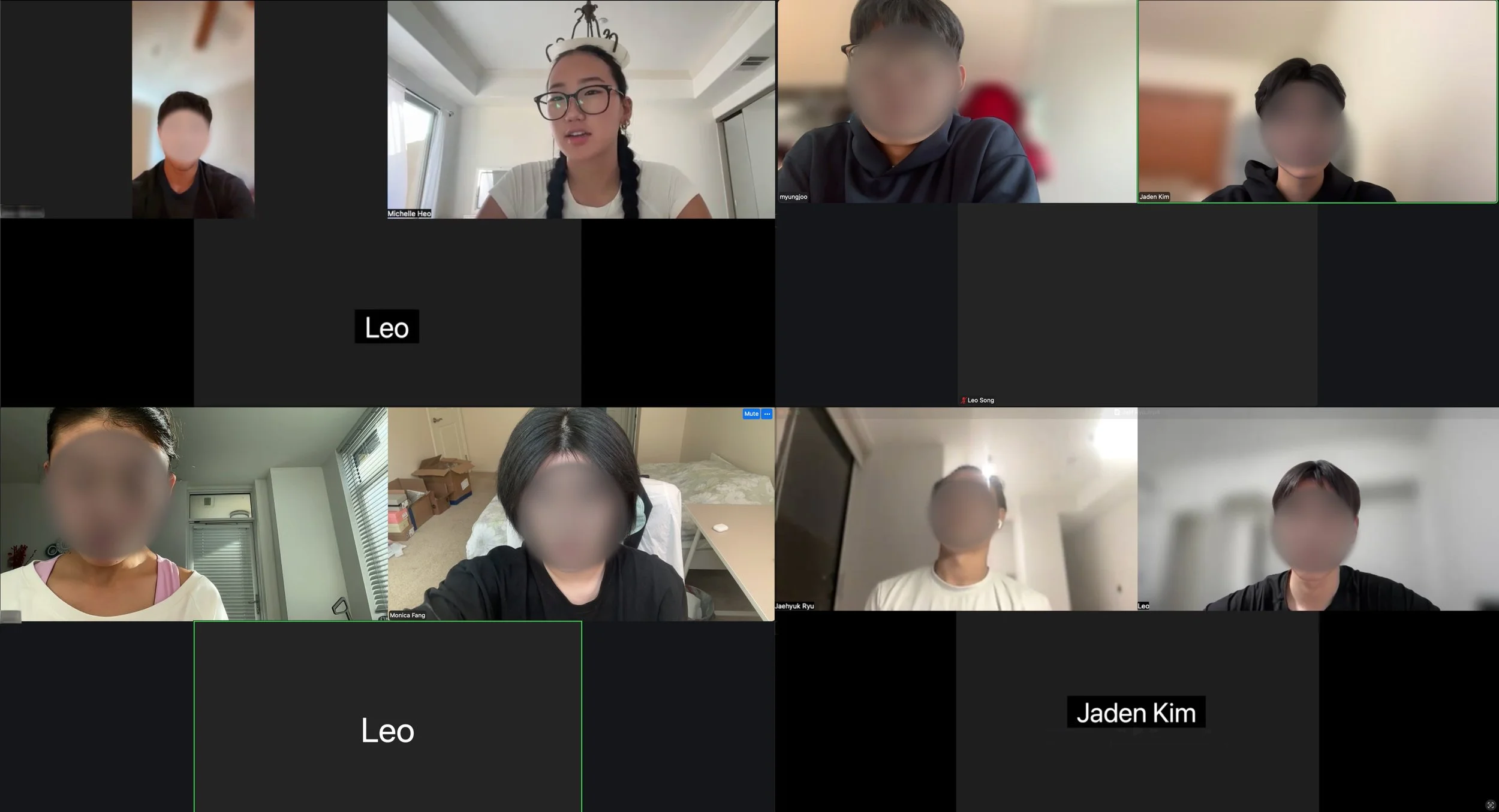
“When I run with a partner, it becomes much more enjoyable — you get to talk for forty minutes straight, and it brings joy.”
– Jimin ***
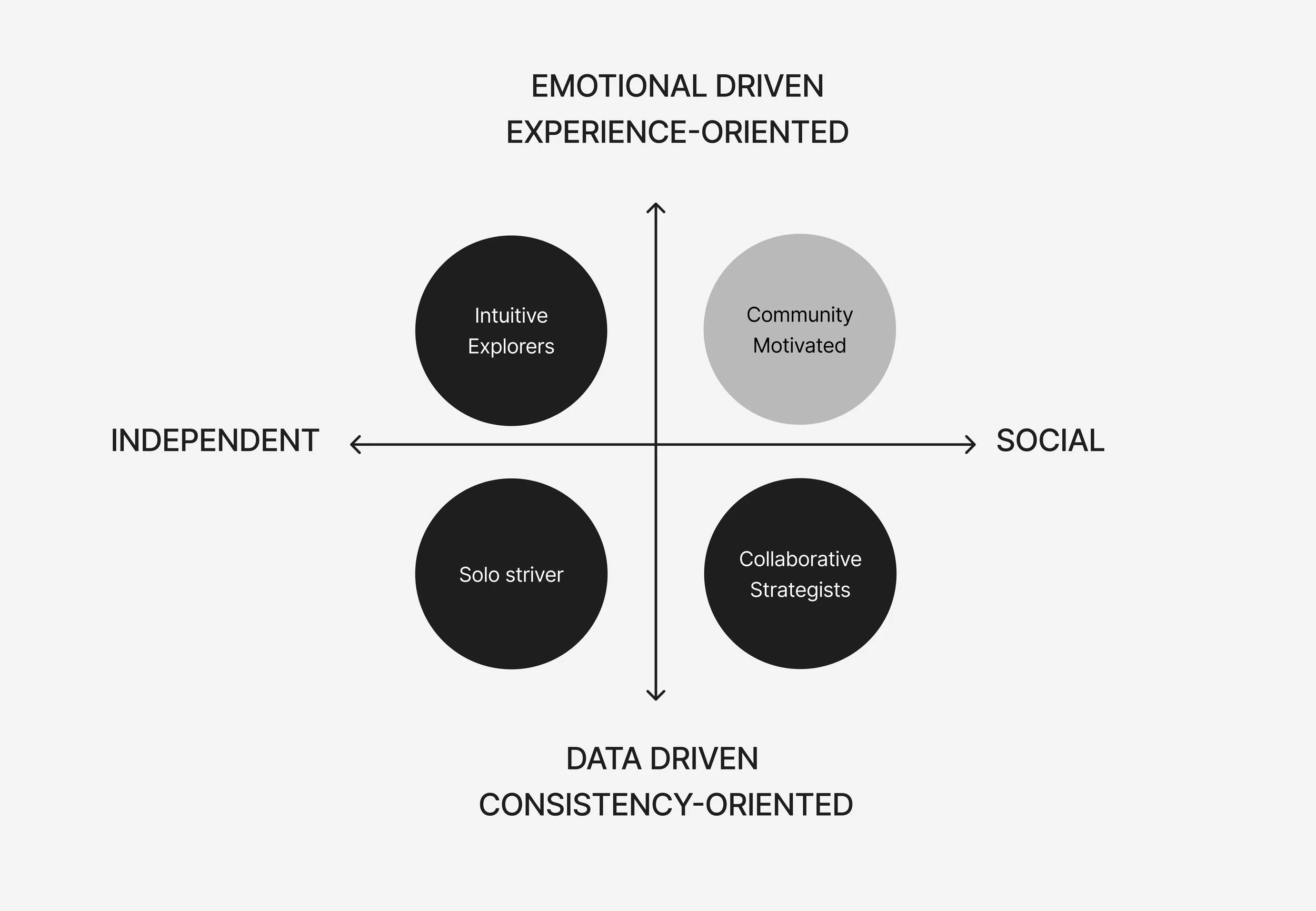
→ Identifying user types using research by user behavioral continuums;
Independent ↔ Social
External Validation ↔ Personal Fulfillment
Tech dependent ↔ No tech
Data Driven ↔ Emotional Driven,
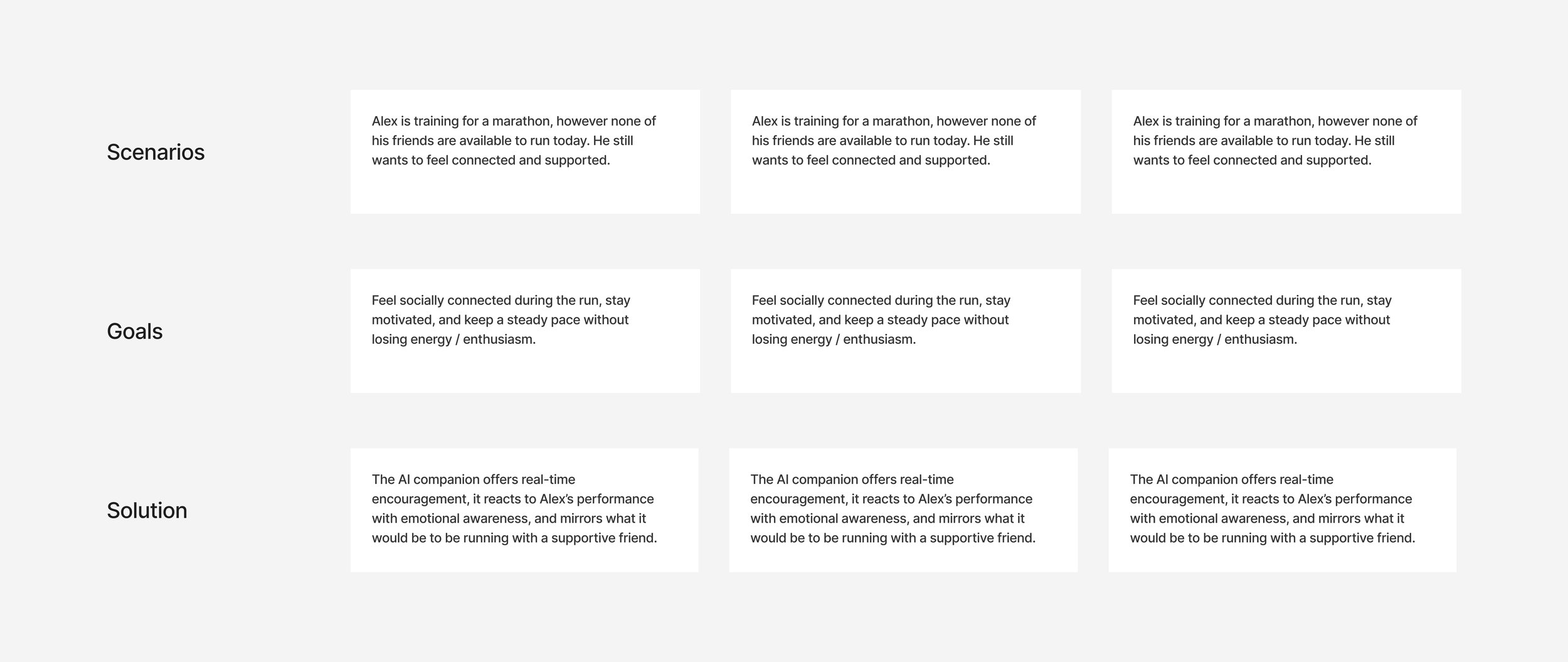
guided the development of user story, flows, and scenarios.
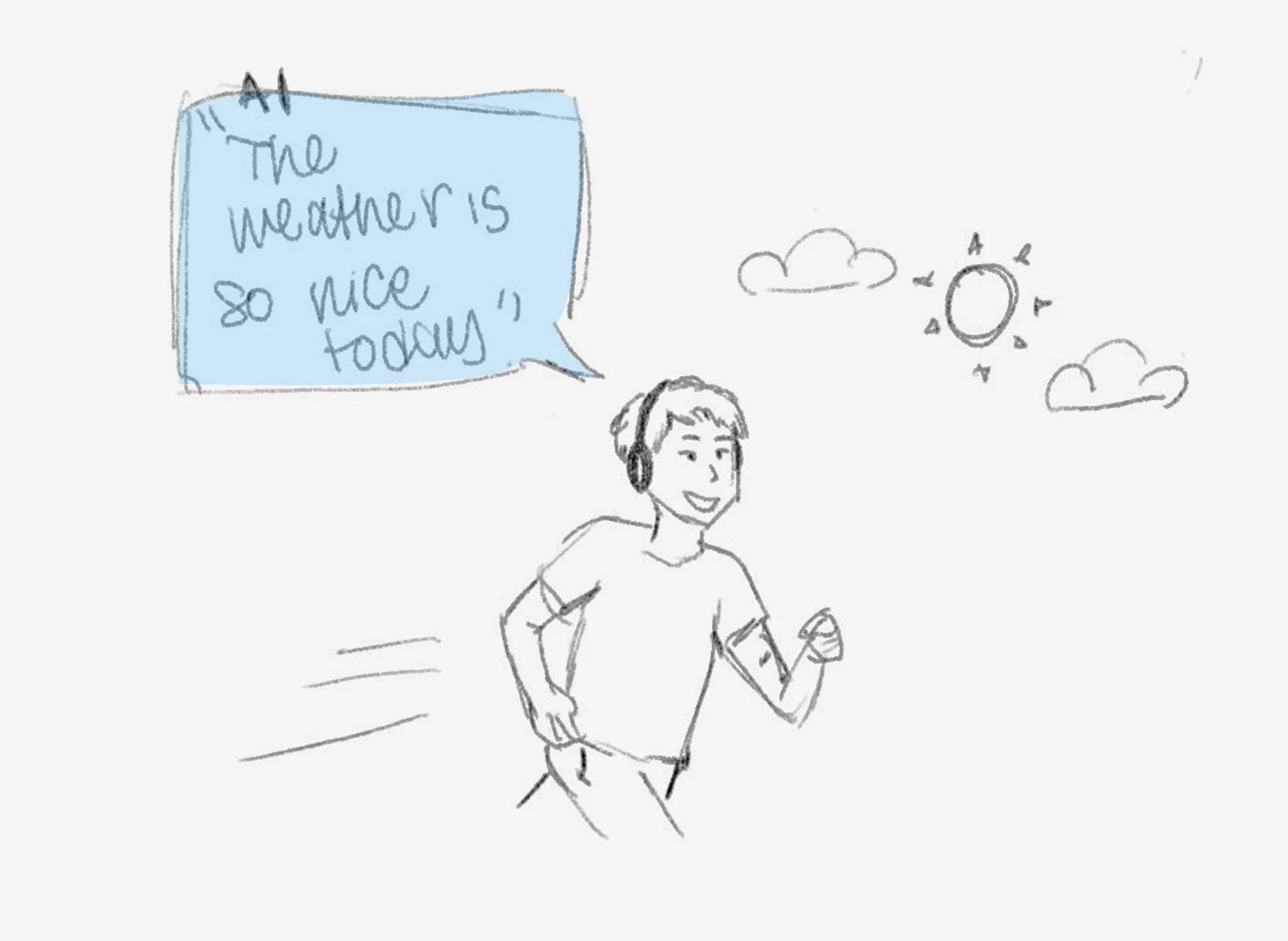
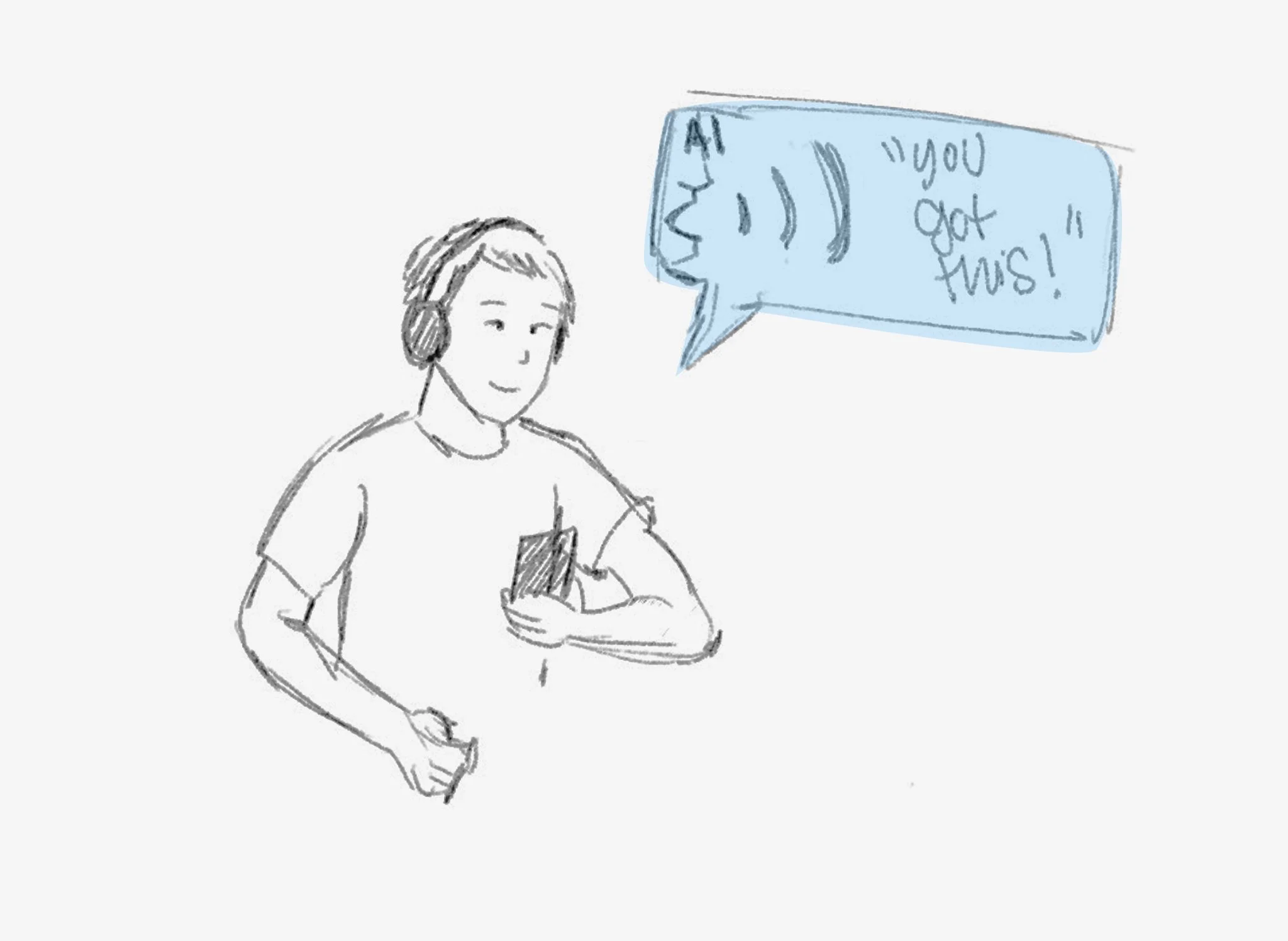
The AI companion provides real-time positive feedback, acting as a supportive presence that reacts to Alex's performance. Alex feels the support, and confidence, and completes a great run.
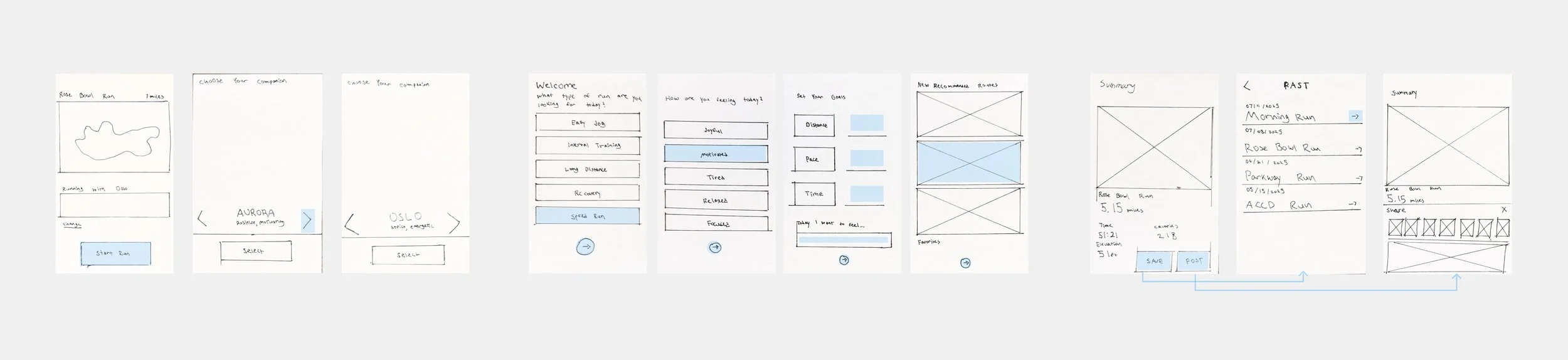
Paper prototypes were sketched around three ‘tasks’ or core flows:
Adjusting the AI companion, customizing running preferences, and viewing, saving, or sharing the run summary.
Insight #1
The flow feels too long, and some steps feel unnecessary.
What is the 'device' of 2035? How can wearable ecosystems take place?
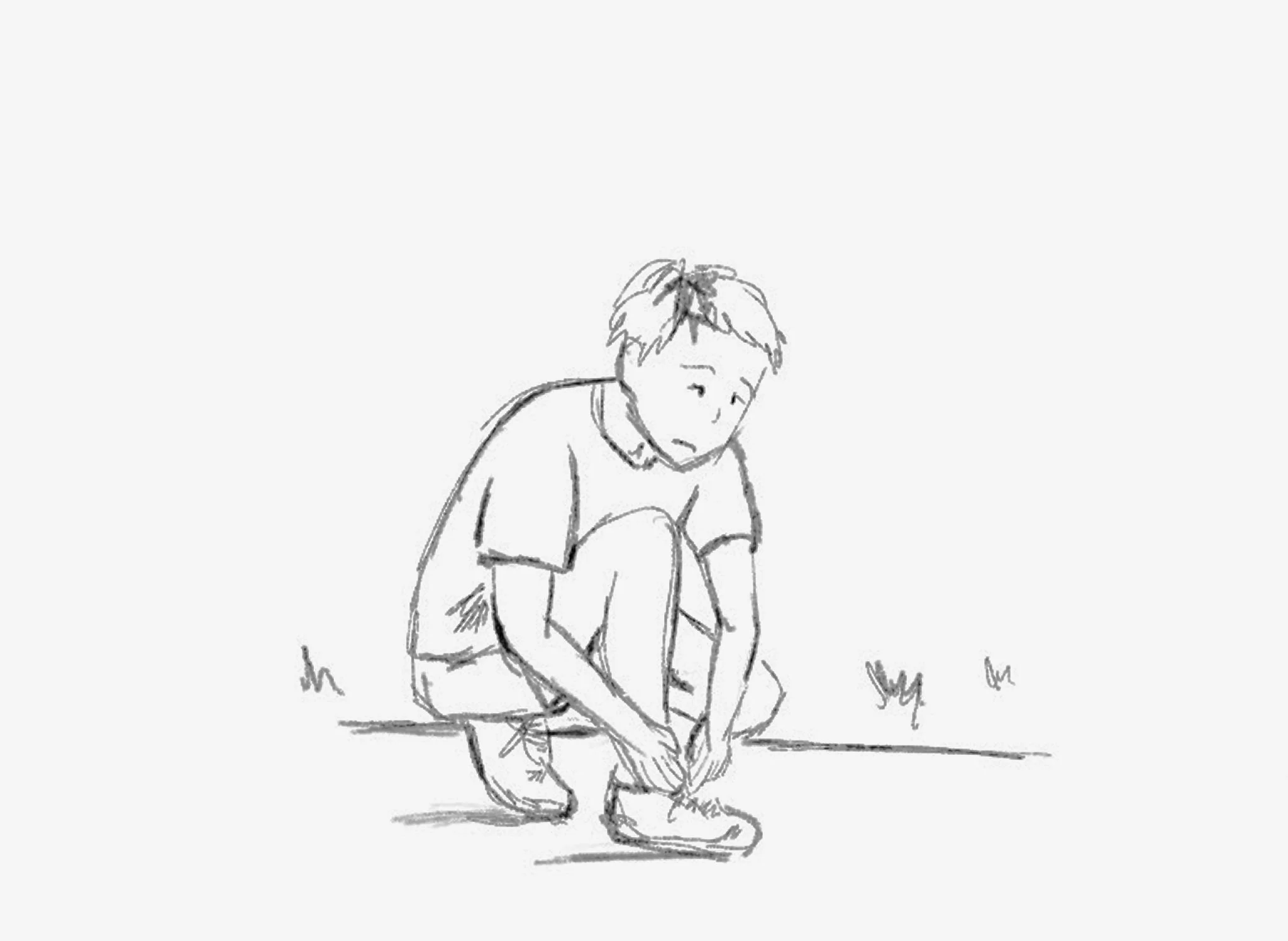
Seeing Alex's low mood and hesitation, the AI offers personalized encouragement and steps up to fill the role of the missing running partner, helping Alex start his run.
Findings*
Beginners [1]
Often struggle with motivation, confidence, and building consistent habits. Understanding their early challenges helped us explore how running can feel more approachable and rewarding from the start.
Recreational runners [4]
Representing the largest group, running primarily for enjoyment and wellness rather than competition. We focused on understanding their motivations, frustrations, and emotional needs beyond performance data.
Professional runners [2]
Require more advanced support, including performance tracking and structured training. We explored how AI could assist with goals, consistency, and reaching peak performance.
“A mentor kind of support… not everybody has a coach or someone who can keep them going.”
– Ixchel *******
Research Implementation
User Scenarios
Storyboard
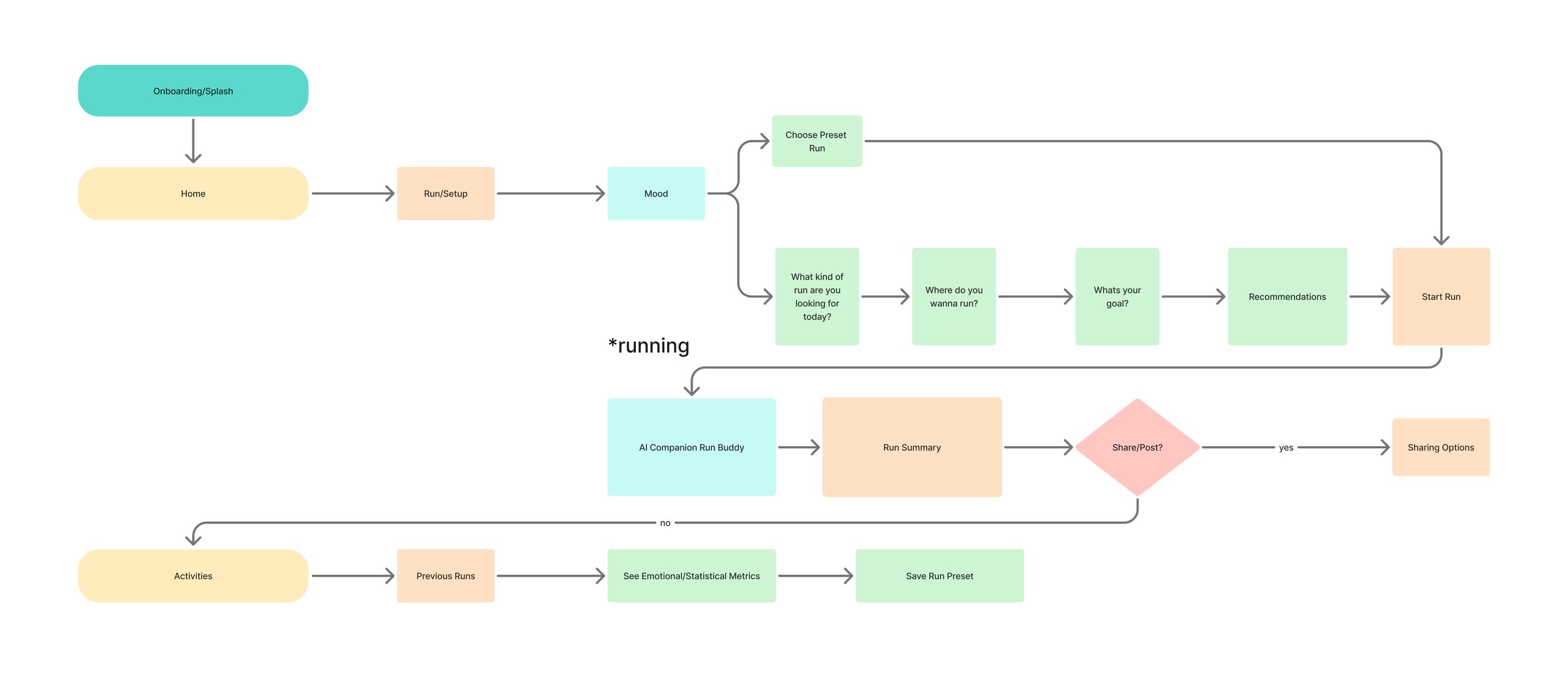
First User Flow
Paper ProtoType Sketches
Final Opportunity Statement
User Matrix
User Type
How might we use AI to provide human like support that balances empathy and motivation, helping runners feel understood and inspired in every run?
Community Seeker
Alex learns that his friends cannot join him for their planned run. Alex immediately feels sad, and struggles with motivation because his friends are gone.
User Testing
Paper ProtoType Usability Testing
Design
Mid Fidelity
Future Direction
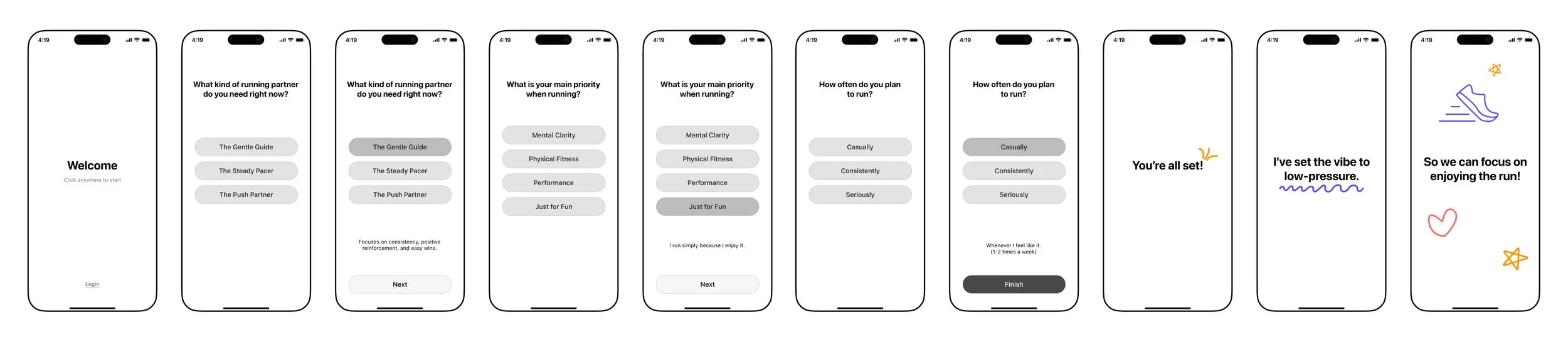
Onboarding
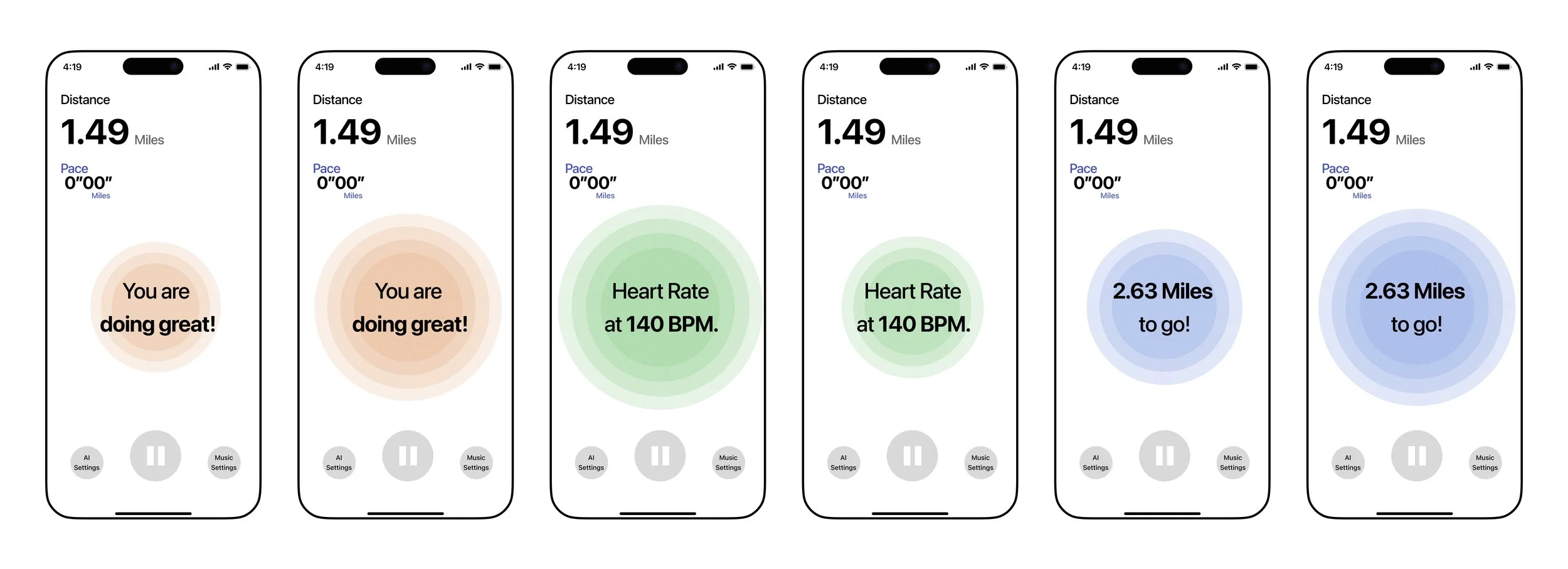
During Run → Visuals
During the run, users can track progress, pause or stop, adjust music, and modify the AI’s guidance. The interface also provides audio progress updates and positive feedback based on performance improvements.
“I always like running in, like, scenic areas. So I would always, like, look for new places. I don't like running in the same, like, route every time.”
– Haan *****
Insight #2
The order of actions doesn’t match runner’s mental model.
New users complete a short questionnaire that helps the AI feel more human and enables the experience to adapt to their evolving emotional and physical needs over time.
Target Interviewee
Professional Runners
Recreational Runners
Beginner Runners
Insight #3
Screens lack clarity and need stronger affordances.
How will the arrival of AGI allow the companion to understand a runner’s unspoken needs and psychological barriers?
We conducted usability testing on the three core flows to better understand how users navigate and interact with the experience.
Participants were asked to think aloud as they moved through each task, allowing us to observe their thought process, expectations, and points of confusion in real time.
→ This helped us identify which parts of the interface felt intuitive and which areas needed refinement.
Test 1 - Jakub ***
Test 2 - Joan***
Test 3 - Charlie ***
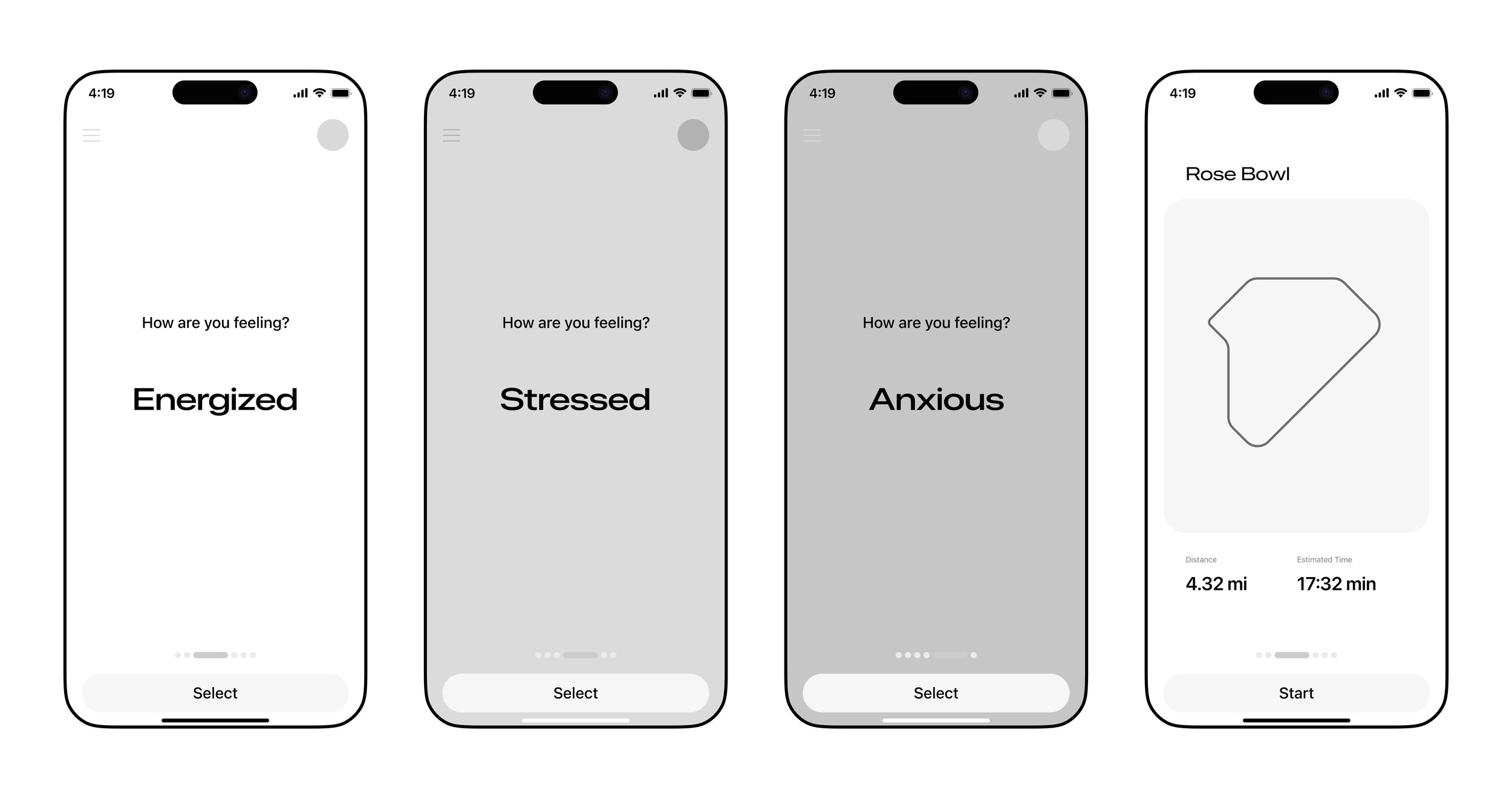
Pre-Run → Emotional State Selection
Before the run begins, the app invites users to check in with their mood, allowing AI to shape routes, distance, and tone accordingly. Reduces pressure and aligns the experience with the user’s emotional needs.
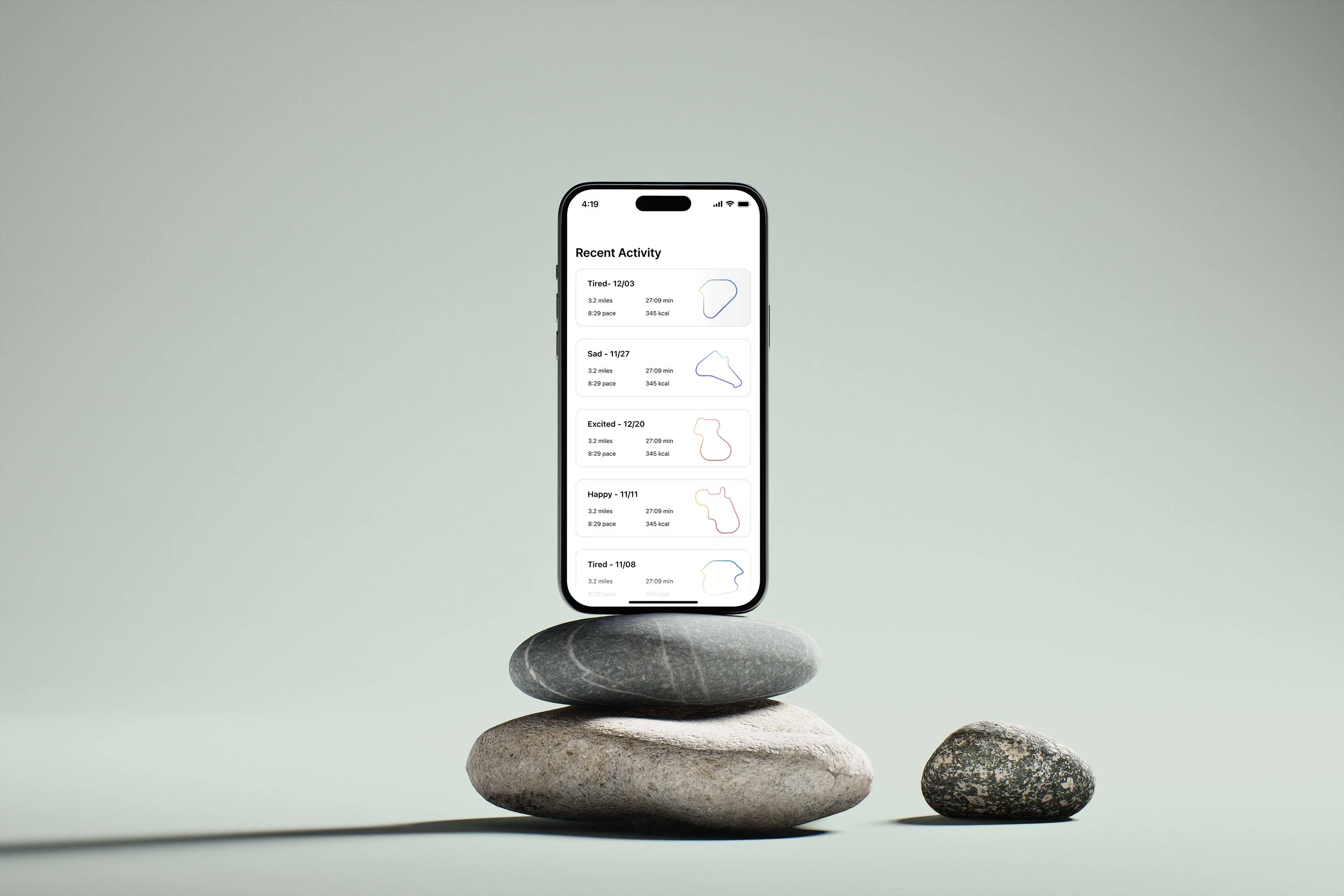
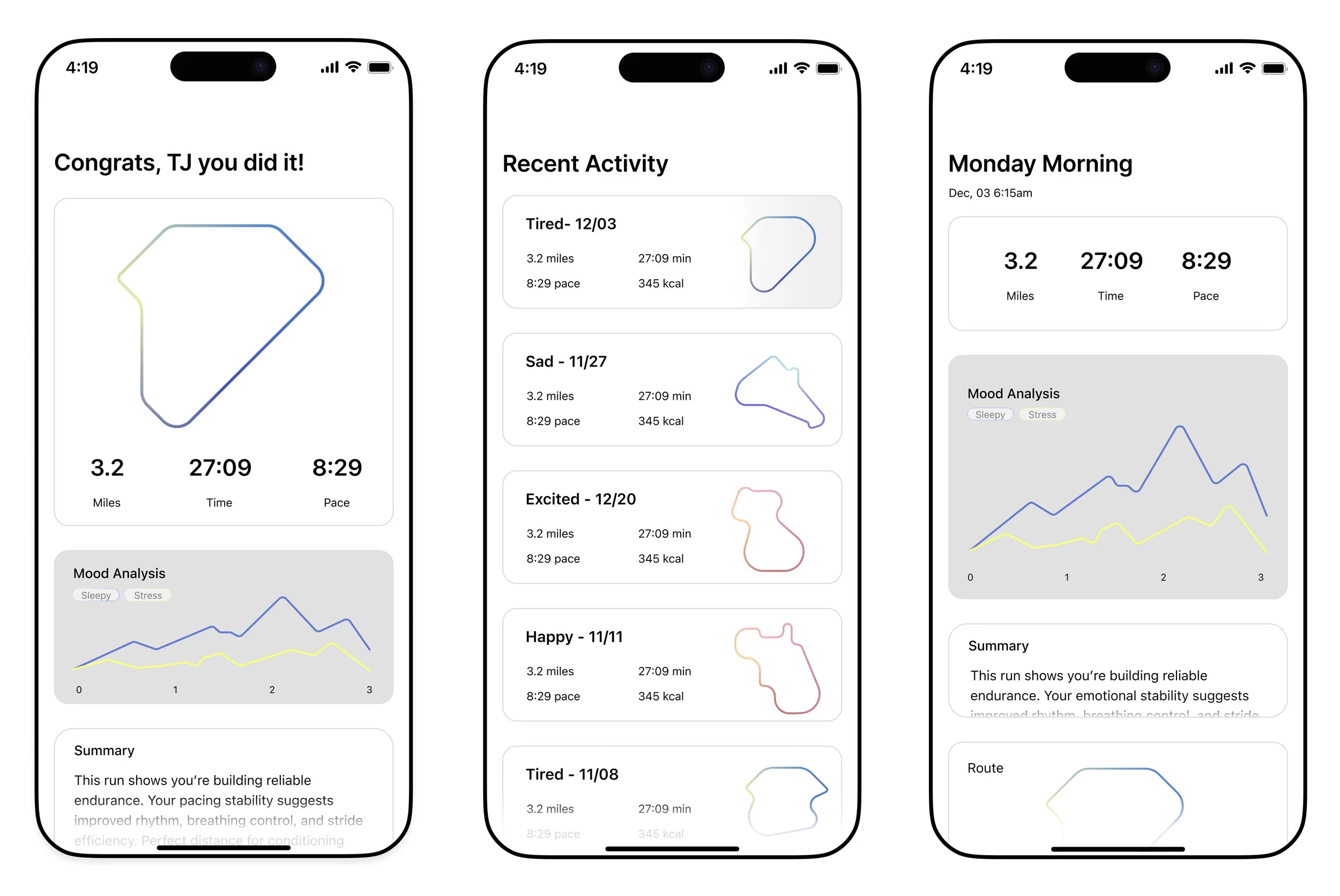
Post-Run → Summary & Activity
After the run, the app provides a clear summary of distance, pace, time, and route, along with an AI-generated mood analysis that reflects emotional changes.
This helps users understand not just what they accomplished, but how the run impacted their well-being.
How can we design high-performance interactions that minimize cognitive load during physical exertion?